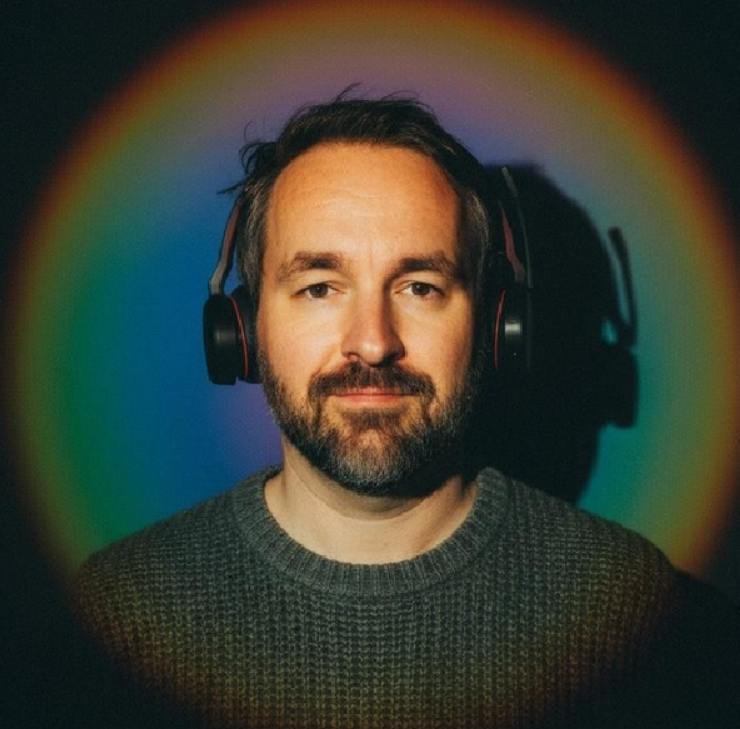


By their powers combined… (Yes, that is a Captain Planet reference!)
ADHD and ASD form a unique profile known as AuDHD. But before we dive into the science, I want to talk about the feeling of growing up without the manual.
For as long as I can remember, I felt "off." It was as if everyone else had been handed a rulebook on how to socialize, how to ask for help, and how to simply exist without feeling the need to apologize for it.
Back in the 80s and 90s, I looked into Autism and ADHD (then of
ten just called ADD). Bits of each felt like me, but the medical consensus back then was a brick wall: "ASD and ADHD can never co-exist because their traits are too contradictory." I was left confused, wondering if the problem was just me.
Today, we know better. Not only can they co-exist, but they often perform a balancing act—masking one another and making it incredibly difficult to spot from the outside. While it can still be a challenge to get a formal diagnosis, new research is coming out all the time. Things are finally getting better, and the "rulebook" is finally being rewritten.
So let's tackle these one at a time:
What is ADHD? (The Official Bit)
At its core, Attention Deficit Hyperactivity Disorder (ADHD) is a neurodevelopmental condition.1 This means your brain is simply wired differently from a "neurotypical" person.2
Despite the name, it isn't always about a lack of attention; it’s more about a struggle to regulate where that attention goes.3 Think of it like a TV remote where the buttons stick—sometimes you’re stuck on one channel (hyperfocus), and other times it’s channel-surfing at 100mph against your will.
The Three "Buckets" of ADHD
Doctors generally group the symptoms into three main categories:
Inattentive which can present as: forgetfulness, losing your keys (again), "zoning out" during conversations, and struggling to start boring tasks.
Hyperactive-Impulsive which can present as: Fidgeting, talking a mile a minute, acting on a whim without checking the "consequences" first, and an internal sense of restlessness
Combined: which can present as: A "greatest hits" mix of both. You get the distracted thoughts and the physical energy,
Why it feels different for AuDHDers
In your specific case, ADHD is the part of you that might crave novelty, excitement, and "winging it." However, when you add ASD (Autism) into the mix, you have a second voice in your head that demands routine, logic, and a plan for every possible outcome.
It's that internal "tug-of-war" that makes the AuDHD experience so unique—and why it was so hard for people to spot in us for so long!
What is ASD? (The Other Side of the Coin)
Autism Spectrum Disorder (ASD) is another neurodevelopmental condition, but it focuses more on how you process information, sensory input, and social communication.
If ADHD is about regulation, ASD is often about intensity and structure. It’s like having a high-definition processor in your brain—it picks up every detail, every flickering light, and every subtle social cue (or the lack thereof), which can be incredibly overwhelming.
The ASD "Core" Traits
While everyone is different, ASD usually shows up in these areas:
- Social Communication: Finding the "unwritten rules" of conversation confusing, taking things literally, or finding small talk exhausting.
- Sensory Processing: Being "hyper-aware" of your environment. This might mean you can't stand the sound of someone chewing, or you find certain clothing tags feel like sandpaper.
- Need for Predictability: A deep comfort in routines, "safe" foods, or deep-diving into specific interests (often called "Special Interests").
The AuDHD "Glitch"
This is where it gets "fun" (read: chaotic). In an AuDHD brain, these two conditions often have a bit of a scrap:
- The ADHD side is bored and wants to go to a loud, busy concert for the "vibe."
- The ASD side is terrified of the crowds, the loud noise, and the fact that we don't know where the exit is.
Because these two sides are constantly negotiating, we often look "fine" on the outside because they balance each other out. The ADHD makes us look more social than the "stereotypical" autistic person, and the ASD makes us look more organized than the "stereotypical" ADHDer.
Inside, however, it’s a constant battle of "I need a strict routine" vs. "I am physically incapable of following a routine."
The Big Question: Why did it take 40 years?
You might be wondering: “If I’ve got both, how on earth did I (and the doctors) miss it for four decades?”
The answer lies in the AuDHD Mask.
Think of it like a set of scales. The ADHD traits and the ASD traits often sit on opposite sides, perfectly balancing each other out to the outside world.
- My ADHD might make me want to blurt things out, but my ASD is hyper-vigilant about social rules, so I stay quiet.
- My ASD needs a rigid plan, but my ADHD is great at "winging it" when things go wrong, so I look like I’m coping just fine.
On the outside, I just looked like a "quirky" or "sensitive" guy who was perhaps a bit of a perfectionist or a procrastinator. But on the inside? It was an exhausting 24/7 negotiation.
Changing the Narrative
For years, the medical world thought these two conditions were mutually exclusive. It wasn't until relatively recently (around 2013 in the medical manuals, but even later in general practice) that doctors were officially allowed to diagnose both at the same time.
If you grew up in the 80s or 90s like I did, you were either "the hyper kid" or "the quiet kid"—nobody was looking for the person who was both.
So, what now?
Now that we know what the bloody hell AuDHD is, we can stop fighting our brains and start working with them. It’s not about "fixing" anything; it’s about finally having the right manual for the right engine.
If any of this feels familiar to you, you aren't "broken" and you certainly aren't "stupid." You might just be running a different operating system.
References
On the "Contradictory" History & DSM-5 Changes:
- American Psychiatric Association. (2013). Diagnostic and Statistical Manual of Mental Disorders (5th ed.). This is the "big book" that finally removed the rule saying you couldn't have both ADHD and ASD simultaneously (Epstein & Loren, 2013).
- Epstein, J. N., & Loren, R. E. (2013). Changes in the definition of ADHD in DSM-5: subtle but important. Neuropsychiatry, 3(5), 455–458.https://doi.org/10.2217/npy.13.59
On the Prevalence of AuDHD:
- Avni, E., Ben-Itzchak, E., & Zachor, D. A. (2018). The presence of comorbid ADHD and anxiety symptoms in autism spectrum disorder: clinical presentation and predictors. Frontiers in Psychiatry, 9.https://doi.org/10.3389/fpsyt.2018.00717
- Umeda, M., et al. (2019). Comorbidity and sociodemographic characteristics of adult autism spectrum disorder and attention deficit hyperactivity disorder: epidemiological investigation in the World Mental Health Japan 2nd Survey. International Journal of Developmental Disabilities, 67(1), 58–66.https://doi.org/10.1080/20473869.2019.1576409
On Brain Connectivity & Overlap:
- Bathelt, J., Caan, M., & Geurts, H. (2020). More similarities than differences between ADHD and ASD in functional brain connectivity. Center for Open Science.https://doi.org/10.31234/osf.io/4tfmn
- Martinez, S., Stoyanov, K., & Carcache, L. (2024). Unraveling the spectrum: overlap, distinctions, and nuances of ADHD and ASD in children. Frontiers in Psychiatry, 15.https://doi.org/10.3389/fpsyt.2024.1387179
Further Reading & Resources
- Neurodivergent Insights:Is It ADHD or Autism, or Both?— A fantastic deep dive into how traits overlap and mask each other.
- Simply Psychology:Comparing Camouflaging Behaviors Between Autism and ADHD— Explains why it’s so hard to spot "AuDHD" from the outside.
- ADDA (Attention Deficit Disorder Association):Undiagnosed ADHD in Adults— A helpful guide on why many of us (especially in our 40s!) were missed in childhood.